 Skip to content
Find out how a Smart Prepaid Energy Meter works for your home to offer consumer benefits. See how this new technology works for you.
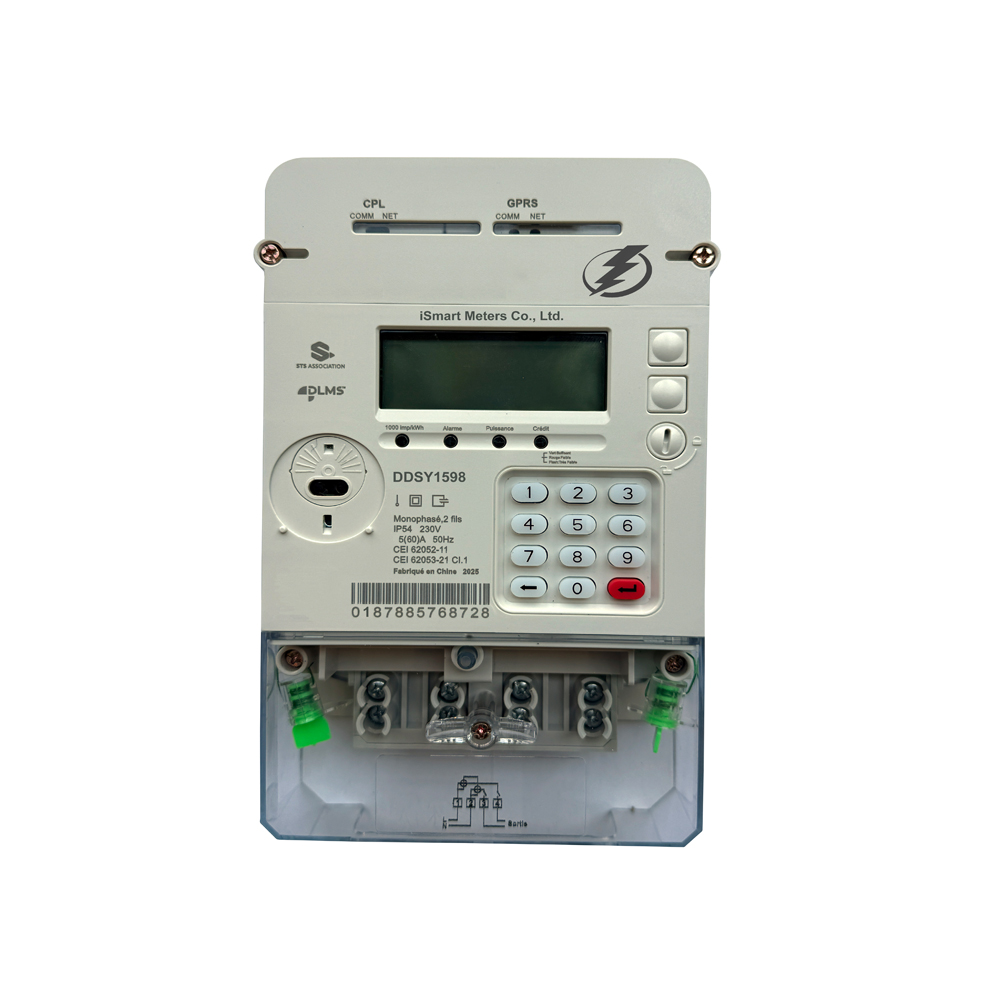
I. What is a smart prepaid energy meter?
How It Works
- Advance Payments: You pay for your gas and electricity before you actually use it, similar to a pay-as-you-go mobile phone.
- Over-the-Air Top-Ups: You add credit to your account via a mobile app, website, or over the phone. The funds are sent wirelessly and automatically applied to your meter.
- Live Cost Tracking: It pairs with an In-Home Display (IHD)—a small portable screen inside your home that shows exactly how much credit you have left and how much energy you are using in pounds and pence.
- Automatic Disconnection: If your credit drops to zero, the power will temporarily switch off until you top up again.
Key Benefits & Safety Nets
II. How smart prepaid energy meter work?
-
- Emergency Credit: The meter will beep and offer you a small buffer (usually £5 to £10) to keep the power on until you can top up.
- Friendly Hours: Smart meters are programmed not to disconnect you during “friendly hours”—typically overnight, on weekends, or on bank holidays—even if your credit is entirely gone. Any energy used during this time will be deducted from your next top-up.
III. Who need smart prepaid energy meter?
🏠 1. People on a Strict Budget
-
Visual Spend Tracking: If you want to see exactly where your money is going, the real-time screen helps you monitor daily costs.
-
No Bill Shock: Because you pay as you go, you will never receive an unexpectedly high monthly or quarterly energy bill.
🔑 2. Landlords and Tenants
-
Short-Term Renters: It is highly useful in student housing or short-term rentals, ensuring tenants pay for exactly what they use before they check out.
-
No Inherited Debt: Landlords often prefer them because it prevents tenants from moving out and leaving behind unpaid utility bills.
🛑 3. Customers Managing Utility Debt
-
Gradual Repayment: If a household falls behind on standard energy bills, suppliers often install a prepaid meter. It can be programmed to automatically deduct a small, agreed-upon percentage (e.g., 10% or 20%) from each top-up to pay off the debt slowly without the need for large lump-sum payments.
🏖️ 4. Holiday Homes or Frequently Empty Properties
-
No Fixed Monthly Cost: If a property is empty for months at a time, you only pay for the standing charge and the exact energy used while you are there, rather than paying an estimated monthly direct debit.
IV. Why need smart prepaid energy meter?
A smart prepaid energy meter is needed primarily because it solves the biggest problems of traditional energy setups: unexpectedly high bills and inconvenient payment methods. Here is why people choose—or need—to use one:
🎯 1. Complete Control Over Spending
-
- Eliminates “Bill Shock”: Traditional monthly bills can surprise you with massive costs, especially in winter. With a prepaid meter, you pay for your energy as you go, so you are always aware of your spending.
- No Estimated Bills: Traditional meters require manual readings. If you forget to submit them, the supplier guesses your usage, which often leads to overcharging. Smart meters send data automatically, so you only pay for your exact usage.
📱 2. Ultimate Convenience
-
- Top Up from Anywhere: Older prepaid meters require you to walk to a local shop in the rain to top up a physical key or card. Smart prepaid meters let you add credit instantly from your couch using an app, website, or text message.
- Easy Tracking: The wireless In-Home Display (IHD) sits on your kitchen counter, showing you exactly how much money you have left in pounds and pence.
🛡️ 3. Built-In Safety Nets
-
- No Sudden Blackouts: Unlike old prepayment systems that shut off the moment your money runs out, smart meters include Emergency Credit and Friendly Hours. This ensures your power stays on overnight, during weekends, and on holidays, giving you time to top up.
🛑 4. Debt Management
- Stress-Free Repayment: If you fall behind on your energy bills, a smart prepaid meter allows you to pay back what you owe gradually. Every time you top up, a small, agreed-upon percentage goes toward your debt, preventing the need for a massive, stressful lump-sum payment.
V. Why smart prepaid energy meter become popular?
👤 Why Consumers Love Them
-
- Mobile-First Convenience: Traditional prepaid meters required a physical trip to a shop to load money onto a plastic token or key. Smart prepaid meters link directly to mobile apps, websites, and digital wallets, allowing users to top up instantly from their phones.
- No “Bill Shock”: Rising global energy costs have made budgeting a priority. Paying as you go eliminates the anxiety of receiving a massive, unexpected bill at the end of the month.
- Absolute Accuracy: Traditional billing often relies on estimated usage if a meter reader cannot access a home. Smart meters transmit exact data automatically, so users never overpay for guessed amounts.
- Worry-Free Safety Nets: Modern software features like Emergency Credit and Friendly Disconnect Hours (which prevent power shutoffs at night or on weekends) have taken away the fear of sudden blackouts.
⚡ Why Utility Companies & Governments Push for Them
- Elimination of Bad Debt: For utility providers, the “pay first, use later” model ensures they are compensated for power immediately, drastically lowering revenue losses from unpaid bills.
- Massive Cost Savings: Sending workers to manually read meters or hand-deliver warning letters is incredibly expensive. Smart grids handle everything digitally and remotely, including switching an account from prepaid to a standard monthly bill.
- Preventing Power Theft: Smart meters feature sophisticated anti-tampering sensors. They instantly alert the utility company if someone tries to bypass the meter or steal electricity.
- Massive National Rollouts: Governments worldwide are mandating these upgrades to build “Smart Cities” and modern energy grids. For instance, countries like India, China, the UK, and regions across Africa are legally replacing hundreds of millions of legacy meters to improve grid stability.
VI. Where will smart prepaid energy meter be installed?
Smart prepaid energy meters are typically installed in the exact same location as your current electricity or gas meters. Because they serve as the entry point for power coming into your property, they must be connected directly to the main service lines. The physical placement usually depends on the age and design of your home, following a few standard locations.
Common Installation Locations
- Utility Closets or Cupboards: In most modern houses and apartments, meters are tucked away in a dedicated indoor closet, a hallway cupboard, or under the stairs.
- Exterior Wall Boxes: In many suburban homes, meters are located inside a weather-proof, recessed plastic box on an outside wall of the house so meter readers historically didn’t have to enter the property.
- Basements or Cellars: In older homes or large apartment complexes, meters are often grouped together downstairs in a shared utility basement.
Crucial Technical Requirements for the Smart Signal
- Cellular Signal Availability: The meter uses a secure mobile network to send data. If your current meter is deep in a concrete basement or a rural area with poor signal, the installer may need to attach an external booster antenna to catch a signal.
- Proximity to the In-Home Display (IHD): While the main meter might sit outside or in a cupboard, the portable screen (IHD) that shows your live credit sits inside your living space. It connects to the meter via a short-range wireless network (similar to Wi-Fi), so it needs to be within a reasonable distance from the meter to function.
- Dual Meter Proximity (Gas + Electricity): If you are getting both gas and electricity smart meters, the electricity meter acts as the primary “hub.” The gas meter sends its data to the electricity meter first, which then sends everything to your supplier. Therefore, the gas meter usually needs to be within a certain distance of the electricity meter.
What to Expect on Installation Day
- The Power Will Go Off: The technician will have to completely isolate and shut off your electricity and gas for about 20 to 45 minutes per meter to safely swap the physical units.
- Clear Access is Required: You will need to clear out any clutter, boxes, or furniture blocking the current meter cupboard so the technician has plenty of room to work safely.
VII. What makes smart prepaid energy meter different from normal prepaid energy meter?
The primary difference between a smart prepaid energy meter and a normal (traditional) prepaid energy meter comes down to connectivity and automation. A traditional prepaid meter requires physical tokens, keys, or cards to upload money, while a smart prepaid meter operates entirely over a wireless network.
📊 Side-by-Side Comparison
| Feature | 🔴 Traditional Prepaid Meter | 🟢 Smart Prepaid Meter |
|---|---|---|
| How You Top Up | In person. You must take a physical key or plastic card to a local shop or post office to load money onto it. | Anywhere. You add money instantly using a smartphone app, website, SMS, or phone call. |
| Adding Credit | Manual physical contact. You have to insert the physical key or card directly into the meter box. | Over-the-air. The credit is sent wirelessly over a secure cellular network straight to your meter. |
| Tracking Your Balance | Hard to see. You must open your utility cupboard and press buttons on a dark screen to check your balance. | In-Home Display (IHD). You get a portable, touchscreen monitor for your kitchen counter showing live costs. |
| Usage Readings | Manual/Estimated. You still have to manually submit readings if your supplier asks, or wait for an inspector. | Automatic. The meter automatically transmits exact usage data to your supplier every hour. |
| Switching Modes | Technician required. To change from prepaid to standard credit billing, a worker must physically replace the meter. | Remote switch. The supplier can instantly flip your meter from prepaid to a monthly bill with the push of a button. |
| Emergency Safety | Strict cut-off. If you run out of money late at night, your power turns off immediately until you can visit a shop. | Friendly hours. Programmed never to cut your power overnight, on weekends, or during holidays if your balance hits zero. |
💡 The Big Takeaway
VIII. How to evaluate a good smart prepaid energy meter manufacturer?
Evaluating a smart prepaid energy meter m anufacturer requires a deep dive into technical performance, hardware resilience, software ecosystem compatibility, and regulatory credentials. Because these devices control revenue collection and critical infrastructure, assessing a supplier purely on unit cost can lead to catastrophic field failures.
1. Interoperability and Vending Standards
-
- STS Compliant: Ensure the manufacturer is fully certified under the Standard Transfer Specification (STS / IEC 62055-41). This guarantees that token generation, vending software, and the meter’s internal cryptographic system seamlessly work together across different vendors.
- DLMS/COSEM Compliant: DLMS/COSEM protocol is transport-independent. Ensure the manufacturer’s DLMS implementation works smoothly across your chosen hardware infrastructure.
- AMI&Vending System Integration: Verify if the manufacturer provides open API tokens or native integration with major Meter Data Management (MDM) and customer billing platforms.
2. Regulatory Certifications and Metrology Accuracy
-
- Accuracy Class: The hardware must meet Class 1.0 (±1% error margin) or Class 0.5S according to IEC 62053-21/22 standards. Class 2 meters often drift during low-load intervals, leading to lost utility revenue.
- Global Certifications: Confirm necessary accreditations such as SICEM, KEMA, MID (Measuring Instruments Directive) for Europe, ANSI C12 for North America, or region-specific type-approval certificates. Always verify the unique certificate number directly with the issuing body rather than trusting brochure stamps.
3. Hardware Durability and Fail-Safes
-
- Magnetic Latching Relay: The internal disconnect switch is a high-risk component. A top-tier manufacturer utilizes high-quality internal relays built to withstand thousands of remote or zero-credit operations under heavy current loads without fusing open or closed.
- Anti-Tampering Architecture: The hardware must feature physical casing seals, reverse-current detection, cover-opening alerts, and localized magnetic interference shields. The meter should immediately report tampering events back to the cloud console.
- Firmware Protections: Look for AES-128 or AES-256 bit encryption on all card-based tokens and wireless data streams to protect against firmware side-jacking or data exploitation.
4. OEM/ODM and Customization Experience
-
- Flexible Communication Modules: A great manufacturer builds meters with modular communication bays. This allows you to hot-swap between 4G/5G cellular, NB-IoT, LoRaWAN, Wi-Fi, or Zigbee configurations depending on the cellular signal strength of the deployment site.
- Firmware Customization: Ensure they can program customized fallback features, multi-tier tariff schedules, local daylight savings adjustments, and automated “Friendly Hours” or emergency credit windows directly into the meter’s baseline code.
5. Bench Testing and Sample Policies
-
- Sample Testing: Ask the supplier for baseline samples to subject to bench testing. Specifically test token entry latency, disconnect operations when the balance hits zero, low-load accuracy, and communication reconnects after an unexpected power outage.
- Defective Rate Agreements: Request a clear, written commitment regarding their acceptable factory defect rate (reputable suppliers aim for less than 0.1% to 0.3%) and a defined replacement logistics process for faulty hardware.
- Your target deployment region (e.g., European Union, North America, Sub-Saharan Africa)?
- The scale of your project (e.g., single commercial property submetering, multi-tenant residential complex, or large-scale utility grid)?

Leave A Comment